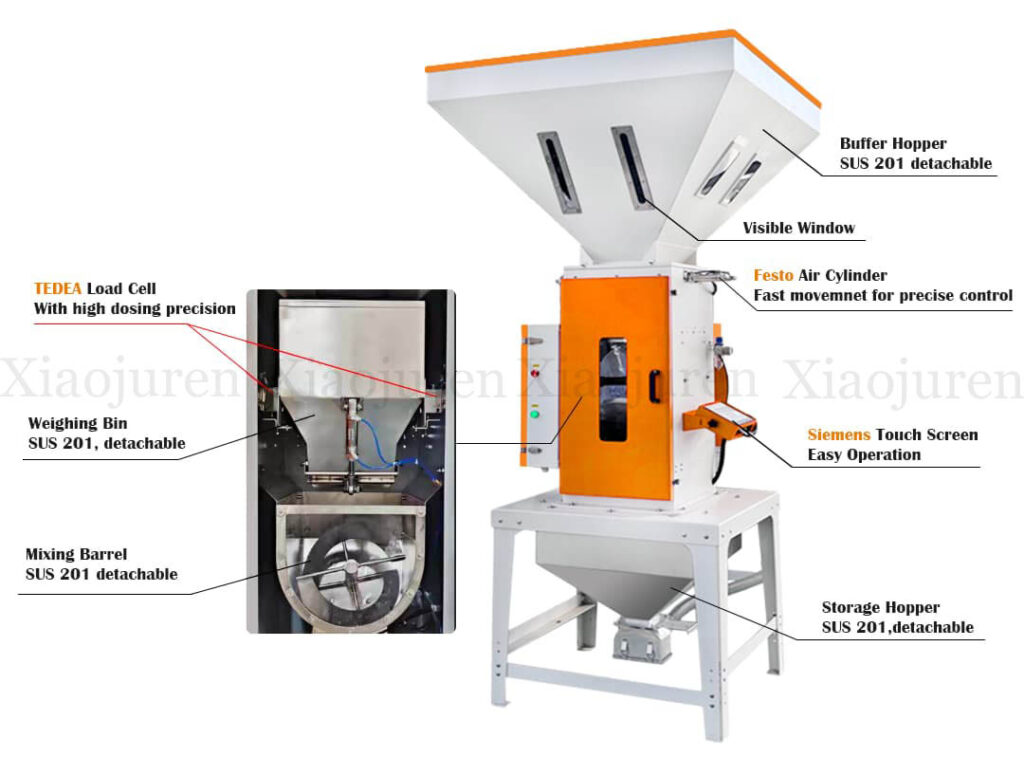
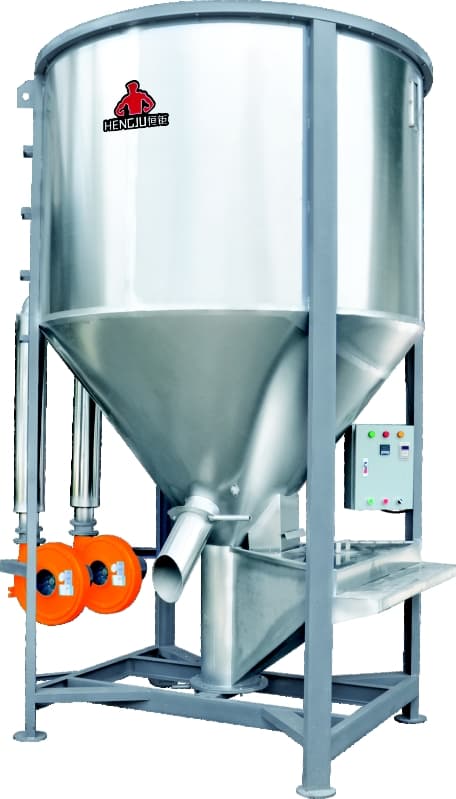
Utilizes real-time load cells to precisely control material ratios by weight, featuring a closed-loop feedback system that automatically compensates for environmental variations. Achieves precision levels up to ±0.5% accuracy, making it ideal for sensitive production processes.
Volumetric Blender
Relies on volumetric measurement through screw speed or timing control. Susceptible to material density variations, humidity changes, and particle size inconsistencies, with typical accuracy ranging between ±2-5%.
Key Performance Comparison
Criteria
Gravimetric Blender
Volumetric Blender
Blending Accuracy
±0.5%
±2%-5%
Material Waste Reduction
30%-50% less waste
Higher waste generation
Energy Efficiency
15%+ savings via dynamic power adjustment
Fixed power consumption
Climate Adaptability
Auto-compensation for humidity/temperature
Requires manual recalibration
Market Suitability for South America
Low-Cost Materials (<$2/kg) with flexible tolerance (>3%) Example: PP/PE recycling operations in small Colombian workshops
Fast Material Changeover Requirements Suitable for Brazilian factories producing <1,000 units/month across multiple resin types
3 Strategic Applications for Gravimetric Blenders
High-Value Material Processing
Essential for engineering plastics (e.g., PA66, PEEK) and medical-grade polymers where material costs exceed $5/kg.
Regions with Power Instability
Compensates for Brazil/Colombia’s grid fluctuations (±15% voltage variance) through adaptive motor control systems.
Humid Production Environments
Maintains precision in Mexican coastal facilities with >80% average humidity using moisture-compensation algorithms.
When Volumetric Blenders Make Sense
Low-Cost Materials (<$2/kg) with flexible tolerance (>3%) Example: PP/PE recycling operations in small Colombian workshops
Fast Material Changeover Requirements Suitable for Brazilian factories producing <1,000 units/month across multiple resin types
Technical Validation & Case Study
Operational Data from São Paulo Automotive Plant
Challenge: 4.2% material waste in ABS dashboard production Solution: Implemented XG-3000 Gravimetric Blender Results: