The food packaging industry is under increasing pressure to reduce material costs, improve product consistency, and incorporate recycled materials without compromising quality or food safety. Processes such as thermoforming and thin-wall injection molding require highly accurate and stable material dosing to ensure consistent thickness, weight, and appearance.
In this context, gravimetric material dosing has become a key technology for manufacturers of food trays, cups, containers, and disposable packaging.
Key Challenges in Food Packaging Production
Manufacturers of food packaging commonly face the following challenges:
Fluctuating ratios between virgin and recycled materials
Inconsistent product thickness and weight
High scrap rates caused by manual or volumetric dosing
Difficulty maintaining stable quality when using PCR materials
Increasing regulatory and cost pressure to use recycled plastics
These issues make precise and repeatable material dosing a critical factor in modern food packaging production.
Main Processes: Thermoforming and Thin-Wall Injection
Thermoforming for Food Packaging
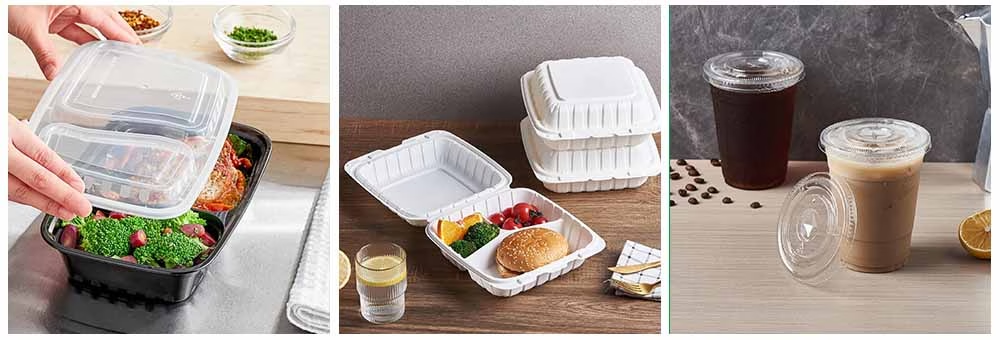
Thermoforming is widely used to produce:
Food trays
Meal boxes
Disposable containers for takeaway and delivery
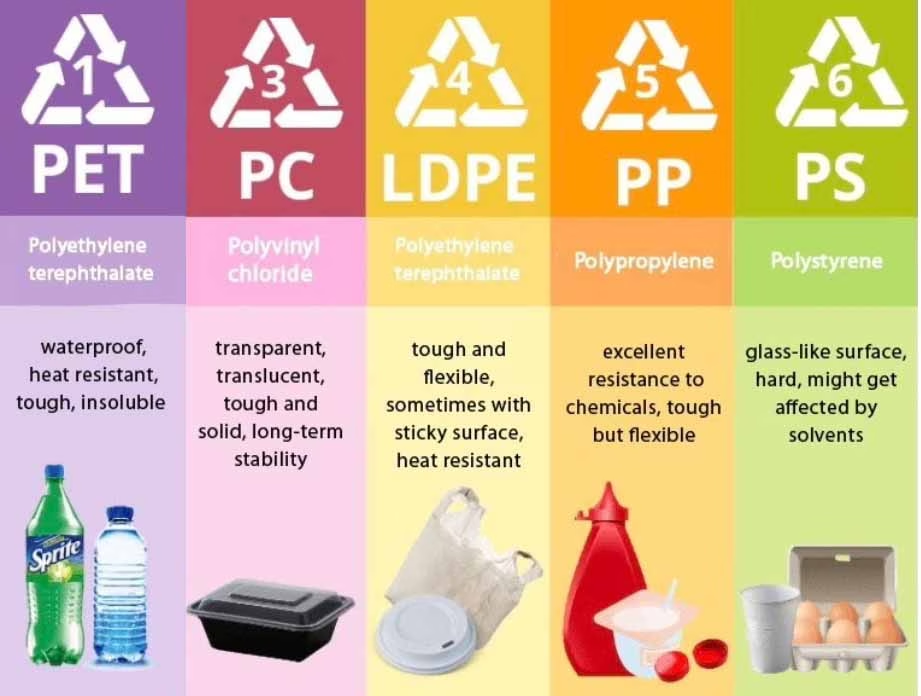
Typical materials include PET, PP, and PC, often combined with post-consumer recycled (PCR) material. Because thermoforming lines operate continuously at high output, even small variations in material ratios can lead to uneven sheet thickness and unstable forming quality.
Thin-Wall Injection Molding
Thin-wall injection molding is commonly used for:
Disposable cups
Lids
Lightweight food containers
With extremely short cycle times, this process is highly sensitive to material dosing accuracy. Minor deviations in additive or recycled material ratios can quickly result in visual defects, warpage, or material waste.
Why Gravimetric Dosing Is Essential for Food Packaging
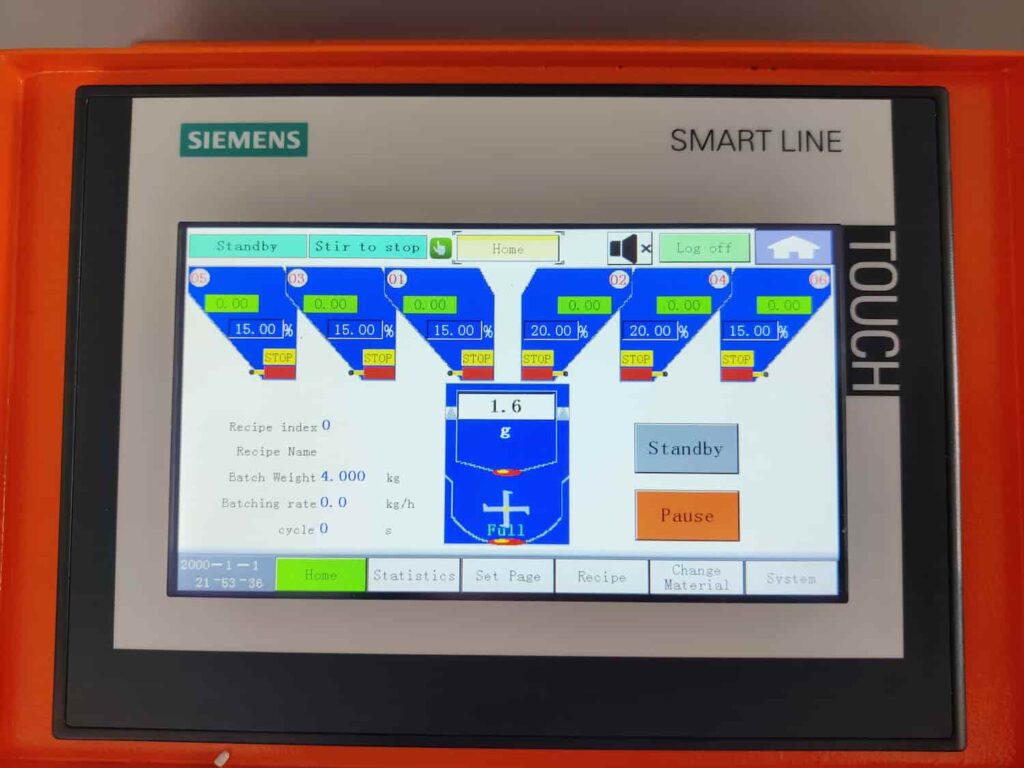
Using a👉gravimetric blender allows manufacturers to control material proportions based on real weight measurement rather than volume.
Key advantages include:
Accurate control of virgin and recycled material ratios
Stable dosing despite bulk density variations in PCR
Consistent product weight and thickness
Reduced material waste and rework
Improved process stability for food-grade applications
Case Study: Thermoforming Food Containers in Thailand (PC / PCR)
One of our customers in Thailand specializes in thermoformed food containers for the food service industry.
Production Background
Process: Thermoforming
Materials: PC virgin resin + PCR
Challenges:
Variable quality and bulk density of PCR
Inconsistent sheet thickness
High scrap rate during production
Implemented Solution
A gravimetric material dosing system was installed to precisely control the ratio between PC and PCR, ensuring stable feeding regardless of recycled material fluctuations.
Results Achieved
More stable sheet extrusion
Significantly reduced scrap rate
Higher utilization of PCR material
Consistent product quality suitable for food packaging
Typical Material Combinations in Food Packaging
In practical applications, food packaging manufacturers often work with combinations such as:
Virgin PC + PCR
Virgin PET + rPET
Virgin PP + recycled PP
Food-grade color masterbatch
Functional additives when required
Gravimetric dosing systems maintain high accuracy even when recycled material content ranges from 5% up to 100%.
Benefits of Gravimetric Dosing for Food Packaging Manufacturers
Easier cleaning and maintenance for food applications
Lower raw material costs
Better control over recycled material usage
Improved production stability and sustainability
Optimizing Material Dosing in Food Packaging Production
For companies involved in thermoforming or thin-wall injection molding, investing in precise gravimetric dosing solutions is no longer optional. It is a strategic decision to improve quality consistency, reduce material waste, and meet the growing demand for sustainable food packaging.
👉 gravimetric blender(link to the English core page) plays a key role in achieving these goals.